
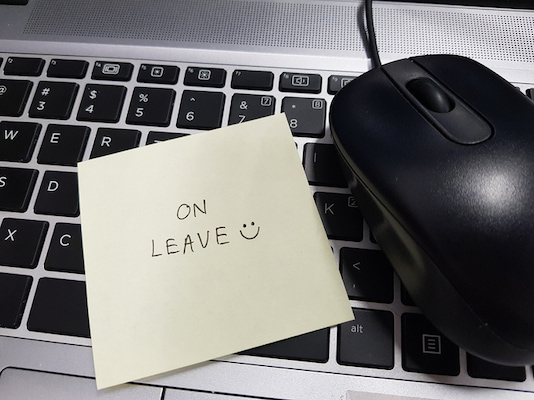
We all need days off work occasionally, for sickness, an emergency, looking after mental health, or when bad weather can stop us actually getting to work. When these unplanned incidents happen, an employee absence management plan comes into play.
What does absence management mean?
Absence management is the process an organisation uses to monitor, manage, and reduce avoidable employee absence, and respond appropriately when absence becomes persistent or long term. It also includes supporting those who are unable to work because of illness or other legitimate reasons.
The need for a structured approach is clear. According to the latest Office for National Statistics (ONS) figures, an estimated 148.8 million working days were lost to sickness or injury in 2025 across the UK.
For employers, effective staff absence management should achieve two things at the same time:
- Support employees when they are unwell.
- Give the organisation a fair and consistent way to manage attendance.
A solid process for absence management should cover:
- How employees report sickness absence.
- How absence is recorded.
- When managers should make contact.
- How short-term and long-term absences are managed.
- When an absence review or trigger point is reached.
- How return-to-work conversations are handled.
- When occupational health services are appropriate.
- Reasonable adjustments for disabled employees.
- How absence data is monitored.
- What happens if an employee cannot return to their role.
The aim here isn’t to make employees feel afraid of taking time off work when they’re ill. This can lead to presenteeism, where staff feel pressure to work when they’re unwell. Research from Careerminds in the US found that 33.5% of workers avoided taking sick days because of concerns about job security, illustrating the point that employees may work when they believe an absence will be punished.
Start with a clear absence policy
An absence policy gives managers and employees a shared understanding of what happens when someone can’t be at work. It should clearly explain how employees report an unplanned absence, who they contact and when, what information they need to provide, how contact will be maintained during the absence, and what happens when they return. The policy should also explain any review or trigger point system, plus what support is available.
When creating or reviewing an absence policy, Acas recommends seeking input from trade unions or worker representatives, while ensuring managers receive appropriate training so the policy is applied consistently.
It’s important to review absence policies against current statutory requirements. For example, from 6 April 2026, statutory sick pay became payable from the first day of sickness rather than the fourth day, and the lower earnings limit was removed.
Consistently record absences
Accurate absence records form the basis of effective absence management. For each absence, employers should record the information they need to manage attendance. This could include dates of absence, whether it was long or short term, the reason for absence if appropriate, and any relevant return-to-work information.
Particular care should be taken when it comes to medical information. Employers should have a legitimate reason for collecting this. Acas recommends considering whether certain types, such as pregnancy-related or disability-related absences, should be recorded separately in order to avoid discrimination or skew the absence statistics of a particular member of staff.
Thorough records mean that HR teams can identify patterns that might otherwise be missed.
For example:
- Repeated Monday or Friday absences or absences around holidays.
- Frequent short absences.
- A particular team with unusually high absence rates.
- An increase in long-term absence.
- Recurring absences connected to a particular work issue.
- Differences in absence between locations, roles, or departments.
The objective isn’t to find employees with high absence rates, but to understand what the data is revealing to you. Many organisations use absence trigger points to decide when an employee’s absence should be reviewed, but these should be used as a prompt, not a punishment. There’s no statutory rule saying that a particular number of absences or days should trigger a review. It’s up to employers to establish their own system according to their workforce.
For example, a policy might seek a review after a certain number of separate absences within a rolling period, or after a specified number of days’ absence. Acas recommends that reaching a trigger point should be the start of an honest conversation, not a path to disciplinary action. Otherwise employees may feel pressured to return before they’re well enough to do so.
Trigger points should also be applied with flexibility. For example, if an absence is connected to a disability, an employer should adjust or disregard some disability-related absences when applying the normal trigger system.
How to manage short-term absence
Short-term absence is normally a period of sickness which lasts less than 4 weeks, although different companies will have different definitions within their own policies.
The CIPD’s Health and Wellbeing at Work survey from the end of 2025 revealed that workers took off an average of 9.4 days over the previous 12 months, compared to 5.8 days before the pandemic. The most common reasons were minor illnesses, mental ill health, stress, and childcare responsibilities.
A practical way of monitoring short-term absence is:
- Record the absence: make sure the employee follows the correct reporting procedure and that the absence is recorded accurately.
- Maintain appropriate contact: ensure managers know when and how to contact employees who are absent.
- Hold a return-to-work conversation: hold a conversation when the employee returns, around whether they’re fit to come back, whether they need support, and whether anything specific contributed to the absence.
- Review patterns: arrange a more formal review if the employee has reached an agreed trigger point.
How to manage long-term absence
Any absence lasting more than four weeks is usually considered to be long-term sickness absence, and requires a more structured approach than short-term absences. The CIPD suggestion is to keep the process moving without making the employee feel pressured to return before they’re ready.
A practical process could be:
- Confirm the absence and agree how you’ll keep in touch – this might be weekly or fortnightly check-ins, checking how the member of staff is doing, sharing relevant workplace information, and establishing whether there has been any change that could affect their eventual return.
- Check if a fit note is required – employees can normally self-certify sickness for the first 7 days, then will generally need a fit note. These can be issued by a range of registered healthcare professionals, not just a doctor.
- Review at agreed intervals – instead of a long-term absence becoming an open-ended period with little review, set appropriate review dates that monitor whether the employee’s health or ability to work has changed, whether there’s a likely timeframe for returning, and whether there’s anything the employer can do to support the return.
- Consider reasonable adjustments – these could include a change of working hours, a modification of duties, equipment provision, or a different work location.
- Plan the return – when a return is looking likely, agree what it will look like before the employee comes back. For someone who’s been away for several months, returning to a previous workload may not be feasible, so consider a phased return with reduced hours, lighter duties, or a gradual increase in responsibilities.
When an employer should use occupational health services
Occupational health is the field of public health which promotes and maintains the highest degree of physical, social, and mental wellbeing for workers, and needs to be considered along with an absence management process.
It provides employers with specialist information about how a health condition may affect someone’s ability to work. Acas points out that occupational health can help employers come to a decision regarding staff who are experiencing physical difficulties or employee burnout.
An occupational health referral is most appropriate when an employee has been absent for a long time, when there’s uncertainty about their ability to return to work, or if the employer needs advice about reasonable adjustments or a phased return.
The referral should have a clear purpose where employers consider what information they need, such as:
- When might a return be realistic?
- Is a phased return appropriate?
- Could the employee return with adjustments?
- Are there likely to be restrictions on their duties?
While occupational health helps an employer to understand how someone’s health may affect their ability to work, coaching provides an employee with confidential support during personal and professional challenges. Careerminds provides coaching at a 30:1 coaching ratio, giving participants dedicated access to a coach throughout their programme.
Measuring absence: the figures that HR teams should track
Absence management is more useful when organisations measure the amount of absence and the patterns behind it.
Absence rate
A basic sickness absence rate can be calculated as:
Total days lost to sickness ÷ total available working days × 100.
So if an organisation has 10,000 available working days and loses 250 days to sickness, it would be
250 ÷ 10,000 × 100 = 2.5% absence rate.
This can be tracked over time, comparing different teams or periods.
Average days lost
Another measure is the average number of sickness absence days per employee, providing a simple view of the overall scale of absence.
This can be calculated as:
Total sickness absence days ÷ number of employees
Bradford Factor
The Bradford Factor highlights the potential disruption caused by frequent, short periods of absence.
The formula is:
S² × D where:
S = number of separate spells of absence
D = total number of days absent.
For example, an employee with 3 separate absences totalling 6 days would have a Bradford score of 3² × 6 = 54. An employee with 1 absence lasting 6 days would have a score of 1² × 6 = 6.
The Bradford Factor can identify frequent intermittent absences as opposed to long periods of continuous absence.
However, a Bradford score isn’t evidence of misconduct or to be used as an automatic dismissal trigger. It’s a measurement tool, and individual circumstances still need to be taken into account.
Dismissals due to sickness absence
Sometimes, an employee’s sickness absence can lead to dismissal if they can’t perform their role properly. This should be seen as a last resort, particularly if the employee has a long-term health condition or is disabled.
Acas states that employers should support employees and consider reasonable adjustments before considering dismissal because of a long-term illness. Dismissing someone because of a disability, or failing to make reasonable adjustments, can create discrimination risks. Because of that, employers should obtain legal or specialist HR advice before moving towards a capability dismissal.
Absence management software
Technology can make it easier to record absences, monitor patterns, calculate absence metrics, and send reminders when a review is due. Software is there to support a clear absence management process rather than replace judgement or conversations with employees, though for smaller organisations, a well-maintained HR system or spreadsheet could work just as well.
Final thoughts on absence management
The strongest absence management strategies look beyond the headline absence rate. They delve deeper into why people are absent, if work is contributing to the problem, whether managers are responding consistently, and what can be done to help people stay or return to work.




Do you require outplacement support?
People are our priority. That is why we have customised talent management solutions at competitive prices that work across every level.